IHS Global Literature Assignments 2006

Tuesday, October 31, 2006

Picadocurtis Extra Credit

A. A Eugene family recently returned form a one year trip around the world. Your extra credit, should you choose to accept it is as follows:
1. Visit the family's website at www.picadocurtis.net
2. Choose one person's weblog.
3. Read the person's pre-trip reflections- under "Background", "Frequently Asked questions"
4. Read the person's weblog entries for one country
5. Write a thoughtful, one-page (12 point, double spaced, 1" margins) letter to the person, reflecting on what you learned by reading their weblog.

In your letter, you should tell the person:
1. What you learned
2. Something she/he did that you might have liked to have done
3. What might you have done differently if you had gone.
4. Questions you have for this person about his/her experience.

will be graded as follows:
__/ 5 At least 3 specific quotes taken form the website ( put in quotes and say who said it.)
__/5 Organization, grammar, spelling, letter format, followed directions
__/10 Effort (DO you address facts and simply ideas or are you "going deeper"- asking about feelings, perceptions, history, etc)

Create your own study guide for Rabbit Proof Fence

Rabbit Proof Fence
Study Guide for pgs. 50-75
Choose two (2) of the following to complete after each chapter: (Please label your choice.)

1. Main Ideas: Write the main idea for the chapter as a newspaper headline. Then write a one-paragraph article to back up your headline. The article should show me why the headline captures the main idea.
2. Visualizing: Draw a sketch from a scene in the chapter. (No stick figures!)
3. Identifying: Write a paragraph relating something from the chapter to your life.
4. Anticipating: At the end of the chapter, write a prediction for what will happen next. Pretend that a person from the book visits a fortune teller. In one paragraph, describe their interaction; use dialogue, body language, and be sure to include the prediction!
5. Recall: Pretend you are writing for Cliffs Notes; write a one-paragraph summary of what happened in the chapter in your own words.

Friday, October 27, 2006

Marngit Questions

Global Literature Name:__________________________
Unit: Australia
Marngit

1. Give specific examples from the text that show ties to dreamtime mythology of the Aborigines:


2. What are the goals of the white surveyors?


3. How do the surveyors influence Marngit?

4. How does your answer to question #3 reflect aboriginal problems today?

5. Who is Marngit?


6. Give two examples of cultural miscommunication in this modern myth.


7. The storm is a symbol for something else. What might it be? Why did the people turn to trees? (Why trees?)


8. What was the true motivation behind sprinkling the rum on the trees?


9. How/ why did Marngit die?


10. What happened to the land after Marngit died? How do we know this?


11. Why does Marngit want to become a Baru?


12. In one sentence, summarize the author’s message to the reader.

Marngit

Marngit
B. Wongar

When white surveyors come to the bush no-one seemed to know how vast was the baru, Crocodile People Country; even Marngit the tribal healer felt confused when it came to the local boundaries. The land stretched from the seashore inland toward distant ranges as far as monsoons could venture. Through it flowed bowana, river, meandering over the long alluvial plain toward mangrove swamps: ‘It follows the way of Mari, tribal ancestors,’ they told the whites.
The whites boiled their billy on the campfire and handed Marngit a cup of tea with a lump of sugar. They showed him a map, trying to explain that the country lies according to a certain longitude, the word and the number of which meant nothing to the tribal healer. He believed that the land, seen on the paper must belong to someone else and not him; bowana was his though. ‘It marks the way our mari traveled inland.’ The whites poured him another cup of tea and told him to take as many biscuits as he liked. They stuck a white peg near the riverbank and later left behind a whole line of them as they moved upstream across the plain. Marngit thought the pegs were merely a mark to find your way back to camp when you go through dense forest. He told the whites how during wongar, beginning of the world, his tribal ancestor Baru, crocodile, was chased from the mangrove swamps inland by Jambawal, the thunder man, with his lightning spear. The ancestor, badly wounded in a hind leg, moved through the plain with the help of his tail, thrusting it left and right. Those tail marks later turned into water bands as the river meandered along; there are about as many of them as a man can count on the fingers of both hands. While the visitors cut their way through dense forest Marngit told them that in his way inland his ancestors gathered a pile of wood and leaves and tried to make a nest A monsoon storm sent after him by Jambawal brought torrential rain, the water washed away the nest and scattered he eggs through the plain. The eggs turned into billabongs.
Later on, when he had moved deeper inland, Baru laid another clutch of eggs. ‘Our tribal people hatched from them,’ Marngit told the surveyors, ’ever since those mythical times humans have been harassed by Jambawal’s gales and lightning as much as Baru was.’ The whites topped up his cup of tea with Bacardi and told him that with the smell of rum about no malignant spirit would ever be seen again. They asked Marngit to call in his other tribesmen to the camp for cuppa.
Marngit explained that he was the only one left of the Baru people. The last monsoon hit the country so badly the people, fearing they might be washed away to sea, turned into trees to stay holding on to the land. ‘Look, they’re everywhere around us.’ He told the whites that from one end of the country to the other each of the trees is a human afraid of the storm.
Since the trees couldn’t walk the whites kindly offered to take their magic cure against the storm, wind and cold, to them. They loaded a consignment of Bacardi on a helicopter and flying over the green canopy below, sprinkled a drink on each tree so that it would grow stronger, and hold firm against monsoons.
Marngit died not long after his visitors left and the name of his country appeared on the Stock Exchange to tell the world of the vast resources of woodchips and timber to be harvested from the monsoon-saturated bush. The old healer turned into a tree, sprung from a pile of bottles the whites left behind at their surveying camp site. That was only for a while though; as the bulldozers moved in they uprooted and pushed him into the river. It appeared at first that the water might be safer than the land; Marngit pleaded to his Mari, to change him into a Baru.
Being a crocodile he could’ve moved downstream and hide in estuary swamps covered with layers of crushed wood and bark floating on the surface. He hoped that after the whites had cut down the last tree they would leave the bare land and then if you walked into the country and laid a clutch if eggs, man and plants would come back again.

Wednesday, October 25, 2006

Rabbit Proof Fence Study Guide Pgs 1-33

Rabbit Proof Fence Name:_____________________________
Study Guide #1

Pages 1-33

Introduction

1. Why was it so difficult for Doris Pilkington to tell this story? List specific difficulties she encountered.


2. Look at the map of Western Australia showing key places in the girls’ journey (in the book, before page xi). Using an atlas , calculate roughly the distance of the return journey & write a description of the landscape and climate of the area the girls passed through.


The First Military Post & The Swan Rivier Colony & The Decline of Aboriginal Society

1. Why, do you think, Dorris Pilkington included these chapters?


2. List five encounters between aborigines and white settlers/ explorers in these chapters & explain how the aborigines were affected by them.


3. What are your first impressions of the author’s writing style.


From the Deserts They Came

1. This chapter is replete with Aboriginal words and phrases. There is a glossary on pages 134-135. Check the definitions. Give several reasons why the author may have chosen to use so many Aboriginal words. How disruptive is it to you, the reader?


2. What is the significance of the passage on pages 24-26, where aborigines are taken to the station. What does the behavior of the earlier Aborigine settlers and the new arrivals tell us about the process of assimilation?

Rabbit Proof Fence Reading Schedule

Reading Schedule

Pages Due
South Sheldon
1-33 Oct 27/30

34-49 Oct 31/Nov 1

50-75 Nov 2/3
75-96 Nov 6/7
96-133 Nov8/9

Tuesday, October 24, 2006

Australia Vocab Day one and two

Australia Vocabulary
Day 1
New Words:
assimilation indigenous indigent nomadic totem

G’day
If you want to assimilate and become a true Aussie, there are a few things you need to do. Not only do you have to learn how to speak Oz, you have to learn about the indigenous community as well, commonly called the Aboriginal community in Australia. Without knowing the indigenous roots of this continent, any traveler would be indigent in knowledge. Here are some things to know. Most of the indigenous people used to travel from place to place and not have a set home. Being nomadic, the indigenous Australians identified themselves not through the place they lived, but through their own totem animal or object. Keeping the stories of their totems and the history of the people alive is one of the great challenges in contemporary Australian life.

Sample sentences: Try your hand now at using your new words by writing them in their correct form (change endings if necessary) in these sentences:

1. After the shellfish supply started to diminish, the ___________ people of Southern Australia moved inland to harvest the delicious witchety grubs.

2. The Scrub Turkey Wallaby was seen as the ancestral father of the clan and became their ___________.

3. The Australian government wanted to _____________ all of the aboriginal people by having them adopt the religion and culture of Europe.

4. After Europeans claimed the land in Australia for themselves, the once abundant supplies of food and space started to vanish leaving many aboriginal people _______________.

5. The cane toad was transported to Australia to attack insects and is not ____________ to the land.

Definitions: Match the new words with their dictionary meanings.
6. assimilation___ a. An animal, plant, or natural object serving among certain tribal or traditional peoples as the emblem of a clan or family and sometimes revered as its founder, ancestor, or guardian.
7. indigenous___ b. To absorb a culturally distinct group into the prevailing culture
8. indigent ___ c. A member of a group of people who have no fixed home
9. nomadic ___ d. Originating and living or occurring naturally in an area or environment
10. totem ___ e. Experiencing want or need; impoverished

Today’s Homophone- Please write two sentences for each homophone using the word correctly
To- “in the direction of”
Two- “the number”
Too- “also” or “very”

The two divers were careful not to swim down to the sunken ship too quickly.


Vocabulary
Day 2
New Words:
estuary meandered malignant consign alluvium

The Great Land of Australia

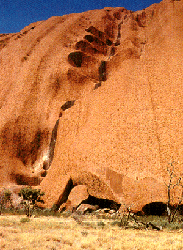
When Australians refer to the Outback, they are talking about a huge piece of land that meanders all over the place. Although much of the land is hot and dry, a climate many would see as quite malignant, there are also many beautiful rock formations such as Uluru or Ayer’s Rock that many people hold as sacred. It was under the care of the Australian government for some time, but was later consigned back to the indigenous people who had cared for it for centuries. The land of Australia is also home to the beautiful Sydney harbor. Unlike murky river waters filled with alluvium, the Sydney harbor boasts clear waters and great views. Surrounding the eastern coast you can also find many estuaries where sea manatees and saltwater crocodiles like to play.

Sample sentences: Try your hand now at using your new words by writing them in their correct form (change endings if necessary) in these sentences:

1. The river snaked down the side of Australia in a way that _____________ in every direction.

2. I would never put my pet koala bear in the pound while I was vacationing, so I ____________ it over to Billy who I knew would keep it safe.

3. In Australia, the gold miners like to look in the____________ fields by the rivers, hoping that gold nuggets will wash out with the rest of the rock and debris.

4. I won’t swim in the _____________ of the river because I know sharks like to swim here to get a taste of a fresh water fish.

5. Some people say teachers are _____________ because they assign tests and enjoy watching their students squirm, but I don’t think they’re that bad at all.

Definitions: Match the new words with their dictionary meanings.

6.estuary ___ a. The part of the wide lower course of a river where its current is met by the tides.
7. meandered ___ b. evil in nature; disposed to do evil
8. malignant ___ c. To move aimlessly and idly without fixed direction
9. consign ___ d. To give over to the care of another; entrust.
10. alluvium ___ e. Sediment deposited by flowing water, as in a riverbed, flood plain, or delta


Today’s Homophone- Please write two sentences for each homophone using the word correctly
Threw- past tense of throw
Through- passing from one side of something to another
Through seven innings, Egor threw just seven strikes.

Wednesday, October 18, 2006

Australia Myth Book


Australian Mythology

Assignment: You will create your own dreamtime myth and illustrations.

Pick one of the pictures on this page and write a myth about it. You could write about the animal or place’s creation or you could write a myth in which the place or animal plays a central role. Use the myth on the back of this paper as an example for your story. You will need to type your myth in columns (half a page with a landscape layout) so that you can cut and paste it and create an illustrated book. Your myth should be written/typed at home and there will be class time to illustrate your book with Aboriginal dot or cross hatch designs. There should be at least two illustrations per book.
You are welcome to extend this project and create more myths and images for extra credit.


The Boomerang and the Sun

From the Aborigine people of the Flinders Range of southern Australia comes the story of how the distinction first arose between night and day – for in the world’s infancy, it seems, all was light and sunshine, with no intervening darkness.

The trouble started one Dreamtime day when the goanna lizard and the gecko set out to visit neighbours. On arrival, however, they found that their friends had all been massacred: with one voice they vowed vengeance upon those responsible. It had, it soon transpired, been the sun-woman and her dingo dogs who had attacked and killed the defenceless community: she was a formidable foe, but the goanna and the gecko were quite undaunted. As the sun-woman stormed and shouted her defiance, the lizard drew his boomerang and hurled it – and dashed the sun clean out of the sky. It plummeted over the western horizon, plunging the world into total darkness – and now the lizard and the gecko really were alarmed. What would become of them without the sun-woman and her warming, illuminating rays? They must do everything they could to restore her to the heavens. The goanna took another boomerang and hurled it westwards with al his might to where he had seen his target disappearing. It fell ineffectually to ground so he threw two others to the south and north, but they too drifted back without hitting anything. In despair, the goanna took his last boomerang and launched it into the eastern sky – the opposite direction from that in which he had seen the sun-woman sinking. To his astonishment it returned, driving before it the sun’s burning sphere, which tracked westwards across the sky before disappearing. From that day on the sun maintained this course, rising in the east and setting in the west, lighting up the day for work and hunting and casting the night into shade fro sleeping. All agreed this was an ideal arrangement, and the Aborigines of the Flinders have felt a debt of gratitude to the goanna and the gecko ever since.

Monday, October 16, 2006

Travel Vocab Part 2 Review

Review Travel Vocabulary Part 2 Name:_________
Let’s go over the twenty new words you studied for the second half of this unit. In the following quiz, match the best possible definition with the word you have studied. Write the letter that stands for that definition in the appropriate answer space.

Review Words Definitions

___1. Pensive a. free from commotion or tumult; peaceful; quiet; calm

___.2 Pallid b. affecting or moving the emotions

___ 3. Itinerant c. traveling from place to place

___4. Metaphor d. indicating authority or command; absolutely necessary

___5. Repress e. Thoughtful or reflective; often in a melancholy way

___6. Confluence f. showing, signifying, or pointing out; expressive or suggestive

___7. Imperative g. to uphold or justify by argument or evidence

___8. Imperialism h. exceedingly eager or avid

___9. Picturesque i. effusively and almost uninhibitedly enthusiastic; lavishly abundant

___10. Impoverished j. to hold back, restrain

___11. Voracious k. beautiful, vivid, quaint

___12. Mongrel l. meticulous; careful; painstaking; particular

___ 13. Conscientious m. the policy of forming and maintaining and empire through subjugation

___14. Poignant n. personified or typified, as a quality or idea

___15. Incarnate o. disposed to be silent or not to speak freely; reserved

___16. Tranquil p. faint in color, pale

___17. Indicative q. any cross between different things, esp. if indiscriminate.

___18. Exuberant r. a comparison not using like or as

___19. Reticent s. a flowing together, especially of stream

___ 20. Vindicate t. to make poor; to deprive of strength, resources

Words for further study: _______________ _______________

_____________ _______________ _______________

Projects: Final Travel Book Project

Global Literature
Freshman Projects
Final Travel Book Assignment


These are your options for the FINAL TRAVEL BOOK assignment.
This assignment should reflect three weeks of thought and effort. This is your chance to chow your literature teacher how well you have been using your projects time and the amazing connections you have made with your travel book. Knock our socks off. We expect great things. This should be the best work you have done during the travel unit!!

CHOOSE ONE OF THE FOLLOWING:
Option one

Travel Film

Imagine that you are the author of your book. You will create a travel video to entice viewers to visit the location from your book. You film should be approximately 5-10 minutes in length. Include you name, the title of your book, the name of your film (if different from the book title) and your teacher’s name on the tape label. Turn in your VCR tape on ___________________.

There is room for creativity, but your film must include the following:
* An introduction of you as the author (feel free to dress the part)
* Proof that you read your book by use of specific examples
* Information on the culture(s) encountered in the book
* Information on three specific events/ locations/ experiences from throughout the book (hint--choose dynamic and exciting moments). Include information on what makes these events/ locations/ experiences special (are they fun? dangerous? etc.) and what lessons can be learned form each visit/ experience.
* THE BIG PICTURE: What will the reader walk away with by reading this book? What will they have learned about traveling? What questions will this book cause them to ask about their own world and life (theme)? Give specific examples regarding which parts will affect the readers (show me you read the entire book).
* Care, creativity, and effort. This needs to be a quality production.

Your film will be assessed on:

* Knowledge of your novel (setting, characters, conflicts)
* Accuracy of information
* Creativity
* Quality and effort
* Completed on time

Option 2
Global Literature Due:______________
Freshman Projects
Final Travel Book Assignment

Travel Book: Publicity Poster
Imagine that you are working at a hip independent bookstore. You are designing an educational poster for a travel book that you intend to sell. You are one of many bookstores trying to sell this book and you want to see your locally owned business topple the corporate giants. Create a travel poster/ wall display to promote the book.
There should be a minimum of one full page of your own writing on the poster.
There is room for creativity, but your poster/ display must include the following:

1. HOOK THE CUSTOMER
• An attention getter to grab the customer (both visually and through a statement) that urges the reader to keep reading about the book
2. AUTHOR INFORMATION
• Give a brief biography of the author. This should be based on info from your book and not just a bio from the internet.
• Explain the author’s style in a book review format
3. SPECIFIC REACTIONS TO SCENES FROM THE BOOK
• You need to show me you have read your travel book. Write specific reactions to the book (writing style, events, characters, etc.) Include details about different moments spanning all of the author’s journey. Specific quotes from the text are helpful but make sure most of the text is yours. Remember to use quotation marks and to cite your sources if you take text from the travel book or any other source!
4. THE BIG PICTURE
• What will the reader walk away with by reading this book? What will they have learned about traveling? What questions will this book cause them to ask about their own world and life (theme)? Give specific examples regarding which parts will affect the readers (show me you read the entire book). 1/2 page minimum (150 words)
• This should be a significant section of your poster!
5. OTHER REQUIREMENTS
• Size: Minimum 11x17; maximum- standard poster board size
• Name of book and author included and neatly presented

Your poster/display’s effectiveness (assessment) will be based upon:
• Knowledge of the places in your novel (I should know you’ve read the book cover to cover)
• Creativity (create a unique poster within the confines of the assignment, goes beyond following the plot)
• Use of strong language (vivid verbs, unique adjectives, etc.)
• Aesthetics (color, neatness, readability, graphics)
• Completed on time

Option 3
Global Literature
Freshmen Project
Final Travel Book Assignment
Tri-Fold Travel Brochure

Imagine that you are a travel agent booking an “educational time travel tour” of the area and time in which your character or author traveled. You are one of many agencies offering this new type of trip. Create a tri-fold travel brochure to send to schools or families to convince them that YOUR trip is the best deal on the market. Please look at the example in class before beginning.
There is room for creativity, but your brochure must include the following:

(pay attention to order of pages):
Page 1: HOOK THE CUSTOMER
• Opening statement about the trip with powerful language that connects the trip you will offer to your character’s actual trip. (attention getter)
• Name and qualifications of your trip guide. The trip guide will be your author. Include a brief biography of your author based on what you learned about them in the book. What are the characteristics of your author that would make him/ her a fabulous guide for this trip? Explain the author’s style. Use specific quotes to back this up. Do not simply research them on-line.
• Length of trip and accommodations
• Picture or graphic
Page 2: ENDORSEMENTS AND CONTACT INFO.
• Include at least three quotes about your trip from satisfied customers; these should connect to actual travel stories from your book.
• Name, address, telephone of your company for further information
Page 3: TITLE PAGE
• Name of your company, your company slogan and a graphic or picture.
Pages 4, 5, 6: SPECIFIC STOP DETAILS (one for each of the three stops you will make)
Note: This is the most important part of your brochure. It should prove that you have read your book and be filled with examples from your travel book.
• Name of place
• Accommodations: sleeping, eating, etc. These should connect to the experiences (sleeping, eating, etc) of your author.
• Special features: Whom will travelers meet? Why would they want to meet him/her? Activities at this particular stop. What makes it special? Is it dangerous? This should include at least three specific quotes from your book.
• Educational Opportunities: What lessons can be learned here that your author learned? Explain how your author learned these lessons. What will the traveler walk away with by following your author’s path? What have they learned about traveling? What questions will this trip cause them to ask about their own world and life (theme)? Give specific examples regarding which parts will affect the readers (show me you have read the entire book). 150 words minimum.
• GRAPHIC OR PICTURE
Your brochure’s effectiveness (assessment) will be based upon:
• Knowledge of the places in your book (I should know you’ve read the book cover to cover)
• Creativity (creating a unique trip within the confines of the assignment, goes beyond following he plot)
• Use of strong language (vivid verbs, unique adjectives, etc.)
• Aesthetics (color, neatness, readability, graphics)
• Completed on time
Option 4
Global Literature Due:______________
Freshman Projects
Final Travel Book Assignment

Travel Book: Traveler’s Web Page
Imagine that you are working at a hip independent publishing house. You are designing an educational website for a travel book that you intend to sell. You are one of many publishing houses trying to market travel books and you want to see your locally owned business topple the corporate giants. Create a website to promote the book.
There should be a minimum of one full page of your own writing on the webpage.

There is room for creativity, but your website must include the following:
1. HOOK THE CUSTOMER.
• An attention getter to grab the customer (both visually and through a statement) that urges the reader to keep reading about the book
2. AUTHOR INFORMATION
• Give a brief biography of the author. This should be based on info from your book and not just a bio from the internet.
• Explain the author’s style in a book review format
3. SPECIFIC REACTIONS TO SCENES FROM THE BOOK
• You need to show me you have read your travel book. Write specific reactions to the book (writing style, events, characters, etc.) Include details about different moments spanning all of the author’s journey. Specific quotes from the text are helpful but make sure most of the text is yours. Remember to use quotation marks and to cite your sources if you take text from the travel book or any other source!
4. THE BIG PICTURE
• What will the reader walk away with by reading this book? What will they have learned about traveling? What questions will this book cause them to ask about their own world and life (theme)? Give specific examples regarding which parts will affect the readers (show me you read the entire book). 1 page minimum (250 words)
• This should be a significant section of your web site!
5. OTHER REQUIREMENTS
You must print out your web page for evaluation. The web page does not have to be published on-line. Use one of the readily available web wizard/ web design programs. The computer lab at school will have programs you can use. Many of the large internet browsers (yahoo, AOL, Netscape, Google) have free software available. If you are an expert you could use HTML to create your page.
It is a great to take risks and to try something you may have never done before, but you must realize that you will work independently. There is no class time or personal assistance from your teacher. If you need help, see the computer specialist, a friend, or family member.
Your poster/display’s effectiveness (assessment) will be based upon:
• Knowledge of the places in your novel (I should know you’ve read the book cover to cover)
• Creativity (create a unique poster within the confines of the assignment, goes beyond following the plot)
• Use of strong language (vivid verbs, unique adjectives, etc.)
• Aesthetics (color, neatness, readability, graphics)
• Completed on time

Wednesday, October 11, 2006

Author Interview: Projects Assignment

Freshman Projects. 1st Quarter: Global Lit.
Author Interview

You are asked to write up a conversation between you and the author of your travel book. This assignment is designed to help you practice writing dialogue. Try to get in you author’s head. How would the author respond to questions/ comments? What would his/her wording be? Don’t just tell me, show me!!
You must write this as a conversation, not a question answer format.

Interview with the author (Due __________) Rubric & Worksheet
Worksheet (Here are some questions to help you get in your author’s head.

1. Describe the author’s personality:
* *
* *

2. Describe the author’s writing style:
* *
* *

3. What body language would this person demonstrate while having a conversation with you?
* *
* *

Rubric
___/5 Conventions are all correct
___/10 Shows and doesn’t simply tell
___/10 Dialogue shows writer’s personality
___/10 Dialogue shows writer’s style

Points will be taken off if the paper is not

• at least one-page (250 words)
• double spaced
• 12 point font
• 1” margins


Here is an example of this:

“You want to try this?”
I glanced at the paper bag he was holding. There were grease stains speckling the bottom making the bag seem like it would disintegrate in seconds. Did I dare? I mean, after all, this was Richard Sterling, the author of The Deep Fried Potato Bug. Who knew what he was chomping down on? It could have been French fries but knowing his gastronomic habits I thought twice.
“Uh…..no thanks. Big lunch,” I replied.
“Your loss,” he said as he turned the bag over and emptied the contents into his mouth. I swear I saw a grasshopper leg. “So what do you want to know about travel writing?”
“Well, I have this class in school where I know I’m growing as a writer everyday, but I thought I should get some tips from a pro….so I called you.” I couldn’t help but blush. I was nervous, this being my first time interviewing a distinguished author and all. We had agreed to meet at Spencer’s Butte to go hiking and talk about his craft. I just hope all this walking wouldn’t inspire whatever he ate to reappear. “What is the secret to slowing down moments?”
“Slowing down moments…..slowing down moments…well…the secret is in the details. Did you notice how in my story, when it got really tense and the French guy was about to eat the bug I took a photo of the scene?”
“Photo?” I shrugged my shoulders. “I’m not quite getting you.”
“Check it out,” he stopped walking, “when I hit the climax of the story, you know, the most intense moment, I let the reader see the Frenchman’s reaction, his wife’s reaction, my reaction, and even stopped to hear and see the bug girl pull out the guts one more time.”

Travel Vocab Part Two Day 3 and 4

Travel Vocabulary
Day 3

New Words:
Voracious Mongrel Conscientious Poignant Incarnate

Rainbows: From spoon to brain
During her usual Saturday morning activities of watching television and eating Lucky Charms, Liza was struck by a poignant TV ad about fly fishing and decided to become an angler. She headed to her local Bi-Mart and started berating several of the clerks.
“Look here, I’m going fishing and I don’t want to catch any old mongrel fish. I want a rainbow trout, what do I need?” Most of the clerks looked at her like she was nuts. Liza’s voracious desire to go fishing had driven her into such a frenzy that she took a shopping cart and started throwing in all types of supplies: 3 cases of salmon eggs, a couple tackle boxes, three poles, and some hooks with shiny neon bits on the end. She rammed the cart here and there throughout the aisles, all the while blathering to herself about this multi-colored trout. When she got to the checkout she realized she hadn’t even been conscientious enough to bring her wallet. As she left the store she kicked a bag of peat moss, numbing her big toe and returning her brain to a somewhat normal state.
“Jeez, I’ve really been ridiculousness incarnate over this whole trout bit; I should really quit eating Lucky Charms all the time.”

Sample sentences: Try your hand now at using your new words by writing them in their correct form (change endings if necessary) in these sentences:

1. The _________ soccer team gleefully chowed down on an awful dish of meatloaf.

2. Every lawyer knows how to make a few _________ arguments to wow the jury.

3. “That dog is crazy, it’s like Rotweiller and Chihuahua and poodle. What a _________!”

4. Jake tried his best to be __________ about keeping his fingers out of his food while eating dinner at his girlfriend’s parents, but he could resist grabbing the brussel sprouts.

5. I often feel like selfishness __________, never wanting to share my jelly beans.

Definitions: Match the new words with their dictionary meanings.
6. ____Voracious a. personified or typified, as a quality or idea
7. ____Mongrel b. affecting or moving the emotions
8. ____Conscientious c. any cross between different things, esp. if inharmonious or indiscriminate.
9. ____Poignant d. exceedingly eager or avid
10. ____Incarnate e. meticulous; careful; painstaking; particular

Today’s Grammar Lesson
Commas are used to separate adjectives that equally modify the same noun. (Notice in the examples below that no comma separates the last adjective from the noun)
I can still remember how my heart started beating when I walked into the dark, little room.

The brief day drew to a close in a long, slow twilight.


Travel Vocabulary Part 2
Day 4

New Words:
Tranquil Indicative Exuberant Reticent Vindicate

No Sea in the City
It was a tranquil morning in Eugene; the birds weren’t squawking much and the neighbors hadn’t started weedwacking their yards or screaming at their children. It was this type of day that made Greg and Stephen, two ex-pirates that had recently assimilated themselves back into society, exuberant.
“Arrgh, y’d think we’er back out on the open seas again,” Greg said while stroking his red beard with his hook.
“A fine day indeed,” replied Stephen, somewhat bothered by Greg’s leftover pirate antics. The two agreed that the calm was indicative of good luck. Greg, who was usually reticent, couldn’t stop talking up the wonders that the day could hold and reverted into some of his past ways.
“Say we go an’ check those there dumpsters across the way for some pirate booty?” said Greg.
Stephen had moved on from his pirate phase and was mainly into spiritual hip-hop, yoga, and basically doing what he called “the right thing.” The two looked out their front window to see Hermes and Andrea on their parking strip.
“Do you remember when we first came off the sea and Andrea let me put a patch on that dog and carry him around for Halloween?” asked Greg.
“Yeah, that was ridiculous; I think she must have had a thing for pirate guys. I never would have let you do that,” Stephen said giving Greg a questioning look that said the dog thing was “not” cool.
“It was no big deal; it didn’t mean anything,” replied Greg. To vindicate himself, he refused to look into Hermes eyes.

Sample sentences: Try your hand now at using your new words by writing them in their correct form (change endings if necessary) in these sentences:

1. What a _________ parrot, she won’t repeat a thing I say.

2. Tom Cruise was ________ when he heard that a Top Gun 3 will be made sometime this year.

3. It was only right that the students __________ themselves against the teacher that broke their cell phones.

4. Shelly always thought it foolish to think a four-leaf clover was _________ of good luck.

5. We waited until the lake was ________ before venturing out to go waterskiing.

Definitions: Match the new words with their dictionary meanings.
6. ____ Tranquil a. effusively and almost uninhibitedly enthusiastic; lavishly abundant
7. ____ Indicative b. free from commotion or tumult; peaceful; quiet; calm
8. ____ Exuberant c. showing, signifying, or pointing out; expressive or suggestive
9. ____ Reticent d. to uphold or justify by argument or evidence
10. ____ Vindicate e. disposed to be silent or not to speak freely; reserved

Today’s Grammar Lesson
Commas are used to enclose an explanatory word or phrase.
Matthew, younger by two years, had always been more daring than I.

The teacher, Mr. Smith, was a suave dresser.

Monday, October 09, 2006

Pico Iyer Travel Questions: The Big Ones

Travel Questions: (The Big Ones)
* Why do we travel and how do we change through traveling?

*Are tourism and travel a positive or negative force in our world?

* How much can we truly learn about another culture? What are some ways we can maximize that learning?

As you read the interview with Pico Iyer, keep these three questions in mind. Also, look for at least five thoughtful “AHA” moments (or profound insights/ epiphanies). Copy these moments from the text onto a piece of paper and respond to the quote using the following questions:

*Why is this moment an “Aha” moment?
*What did you learn about the world, travel, and human beings?

Please type your five quotes and responses.
This is due next class and is designed to help you write your interview with your travel author. Have fun!

Travel Literature Vocab Part Two: Day One and Two

Travel Vocabulary Part 2
Day 1
New Words:
Pensive Pallid Itinerant Metaphor Repress

The Late Student
Angie stared pensively out the window remembering the horrific day that she was late to her Global Literature class. Although she tried to repress the memory over and over, it kept creeping into her subconscious. It had been a typical day up until the end of lunch. She had thought she could make it to the store and back to buy a bagel. She had done it before and was used to being itinerant over her lunch break. However, this day the line had been out the door for bagels, and she had not made it back in time. Her face went pallid when she got back to school and realized she would miss the amazing beginning of her teacher’s lesson; it was the teacher who referred to her metaphorically as “the star” of the class discussions. She was heartbroken and promised to never miss another second of Global Literature.

Sample sentences: Try your hand now at using your new words by writing them in their correct form (change endings if necessary) in these sentences:

1. The woman blanched at the sight of potato bugs and her face became ___________.

2. After the funeral, Eric gazed at the lake in a ______________ way.

3. The usually calm man tried to ______________ his anger when the coffee spilled on his lap.

4. An island is a ____________ for a man who lives his whole life alone.

5. The _____________ IHS teacher struggled to make it from campus to campus each day.

Definitions: Match the new words with their dictionary meanings.
6. ____Pensive a. a comparison not using like or as
7. ____Pallid b. faint in color, pale
8. ____Itinerant c. Thoughtful or reflective; often in a melancholy way
9. ____Metaphor d. to hold back, restrain
10. ____Repress e. traveling from place to place

Today’s Grammar Lesson
Commas
A comma may be used between two independent clauses that are joined by coordinating conjunctions such as these: but, or, nor, for, yet, and, so
Examples:
I would like to speak to him, but I do not know what to say.

Our clothes had become dirty, and we had no other garments to wear.


Travel Vocabulary Part 2
Day 2
New Words:
Confluence Imperative Imperialism Picturesque Impoverished

Journeys
“What do you think you are doing?” asked Margot as she jumped out of the way of the sweaty concert fan. Margot felt that it was imperative that she get out of the mosh pit immediately! Margot had never been to a punk rock show before and was not liking what she saw. What had happened to music since she was a girl? It was as if electric guitars were some kind of imperialist army that was invading and taking over concert venues across the nation, forcing people to listen to their screeching wail. This would not do. Her idea of a good time was watching a cello quartet in some picturesque setting like this park. Just then, a confluence of teens rose up around her as the guitarist threw his pick into the audience. “That does it!” she exclaimed.
Margot, impoverished to hear music more to her liking, walked up to the stage and hit the power switch on the extension chord. The entire audience went silent and turned to stare. Margot grinned, sheepishly.
“Sorry guys.”

Sample sentences: Try your hand now at using your new words by writing them in their correct form (change endings if necessary) in these sentences:

1. Since the country had no resources of their own, they made all their wealth through ______________.

2. A(n) ______________ of Republicans and Democrats joined forces to fight the unjust law.

3. To get into Stanford, it was ________________ that the student had strong vocabulary skills.

4. After the hurricane, the once wealthy family became ___________________.

5. The scene by the lake, with the birds in flight and the sun setting, was _______________.

Definitions: Match the new words with their dictionary meanings.
6. ____Confluence a. indicating authority or command; absolutely necessary
7. ____Imperative b. beautiful, vivid, quaint
8. ____Imperialism c. a flowing together, especially of stream
9. ____Picturesque d. to make poor; to deprive of strength, resources
10. ___Impoverished e. the policy of forming and maintaining and empire through subjugation, usually involving colonies

Today’s Grammar Lesson
Commas
Commas are used between words, phrases, or clauses in a series.
Example:
My favorite foods are pizza, hamburgers, and French fries. (Three nouns in a series)
I took her for walks, read her stories, and made up games for her to play. (Three verb phrases in a series)

Thursday, October 05, 2006

Peer edit sheets

Authors Name:_______________ Editors Name:___________________
Short Story Peer Revision
Sheet #1

Setting

1. Is there a clear setting in the story? Quote two sentences that show the reader where and when the story takes place.


2. Should there be more specific or concrete details about the setting? Provide examples.


3. Is the story set in the best place (does the setting reflect the mood of the story)? If not, how could it be improved?


STYLE AND MECHANICS

1. Are the sentences interesting? What makes them interesting? DO the paragraphs flow or fit together? Mark specific instances where you think the author has done a good job or needs to improve.


2. Are there complete sentences? Are there a variety of sentence (short and long)? Mark where the author needs to improve on their paper and give suggestions in the space below.


3. Is the spelling, punctuation, and capitalization correct? Mark directly on their draft where changes need to be made.


Authors Name:_______________ Editors Name:___________________
Short Story Peer Revision
Sheet #2

Plot with conflict

1. Does the first sentence make the reader want to read on? What technique do they use for an effective beginning?


How might this be improved?


Provide and example.


2. Is the rest of the paragraph equally as gripping? Did it start in the “middle of things”? If not, what can be done to improve it?


3. List the major conflict(s) in the story. What is/are the external conflict(s)?


What is/are the internal conflict(s)?


4. How is the conflict in the story shown (dialogue, description of characters, setting)? Give an example of this.


5. Is the conflict/plot realistic? Do you believe it could happen? Is it an original idea or is it too familiar? Suggestions?


6. Quote two passages that set up the conflict in the story in the exposition.


7. What is the climax (most exciting part or turning point) of the story?


Is there suspense leading up to it? Does the author slow this moment down? If yes, give an example of this. If no, how can it be improved?


8. Should the story be cut? Mark any unnecessary or redundant information. Should it actually begin with the climax? Does it need more information? Where?


Authors Name:_______________ Editors Name:___________________
Short Story Peer Revision
Sheet #3

Characters

1. Who are he characters? Give their names. Do they fit the characters? Are they realistic? Do you identify with them? Are they original?


2. What is the main character(s) problem?


3. Do the characters talk? Where could dialogue be added?


4. Are the characters shown through their actions, physical description, dialogue, setting, thought, what other say about them, etc? In other words, did the author show and not tell? Give an example where they showed. What did the detail say about their character?


5. Did the author avoid telling (explaining) the characters? Give an example where the author “told” about the character. What could the author do to “show” this instead?


6. Are sensory word used? (sight, taste, smell, sound, touch) Does the writer paint a picture of the scene rather than explain what is happening?

Tuesday, October 03, 2006

Self edit sheet for travel story

Self Edit Sheet Name:

1. Is your story centered around one short event or moment? Yes/No


What is the event?


How do you foreshadow this event in your introduction?


2. What is your central conflict? Did you remember to include an internal conflict? (Explain)


3. Explain how you have structured your story to move toward a climax and resolution (create a narrative chart for your story).


Exposition-----------Conflict-------------------Climax-------------------Resolution


4. Is your climax related to your central conflict? (Yes/ No) How does it relate or how will you fix it?


5. What introduction strategy do you use (Description, dialogue, middle of action, etc)? Is it gripping?


6. What does your exposition establish (What do I know 3/4 of a page into your story)?


7. Write one good description in your story and circle it in your rough draft?
8. Write one description that needs work and underline it in your rough draft. Workshop it here.

A. Original description from your story:


B. Less conventional description:


C. Another less conventional description:


9. List three details you show about your main character in the first page of your story. Write the description and then say what it shows the reader.
A.

B.

C.

10. Write a sentence here from your story that shows the mood and/or setting of your story.


Is it specific? Yes/ No

Is it cliché? Yes/ No

What can be done to give it more depth?


11. What have you done to give your story cultural depth? (this can be done for stories that are set in the U.S. too. Every neighborhood/ town has a distinct culture.

CIM Rubric for travel story

CIM Travel Story Rubric
Ideas and Content
1 2 3 4 5 6
The writer:
Shows an identifiable purpose for writing the piece.
Has developed character(s)
Has a specific, developed setting
Has a clear conflict and resolution
Has a clear climax

Organization
1 2 3 4 5 6
The writer:
Has an exposition that sets the scene, characters, and the conflict
Has rising action/ suspense
Has a clear climax that slows down the action
Has a clear resolution that relates to the conflict

Sentence Fluency
1 2 3 4 5 6
The writer:
Uses sentences that flow and sound natural when read aloud
Varies patterns, lengths, and beginnings of sentences
Has a control over simple and complex sentences.
Uses dialogue which sounds natural

Conventions
1 2 3 4 5 6
The writer:
Demonstrates control of standard writing conventions
-punctuation
-spelling
-capitalization
-paragraph breaks
-grammar/usage

Word Choice
1 2 3 4 5 6
The writer:
Chooses words that work
Shows, doesn’t simply tell
Attempts to use colorful language
Occasionally experiments with language, and generally avoids clichés.

Voice
1 2 3 4 5 6
The writer:
Gives the reader a sense of interaction with the writer
Demonstrates a commitment to the topic
Writes in a lively, sincere, or humorous way when appropriate


FINAL GRADE
Final Draft on time and typed: _____/10
All rough drafts included: _____/10
All editing sheets included and complete: _____/10
Total CIM score:__________x2 _____/60
Total: _____/90